| Top Page | Mountains, Valleys & Waterfalls |
|
Mt. Soko (356m) |
|

|
|
|
Mitaki Nishi Ward Hiroshima City | |
|
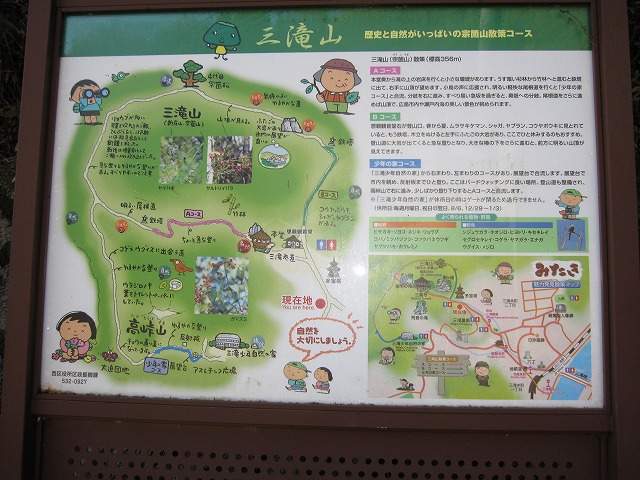
宗箇山 三滝 Route Map in Nihongo |
|
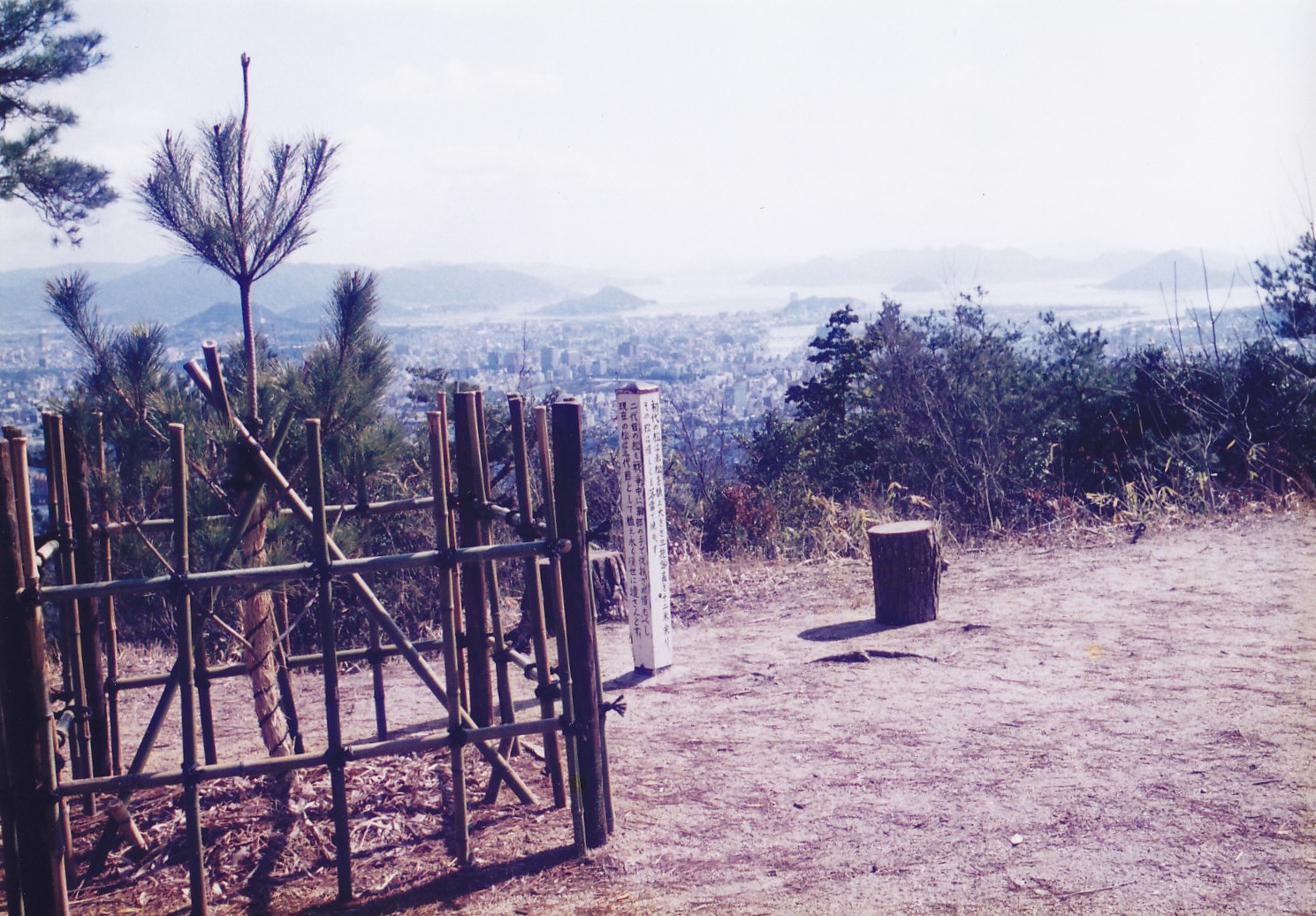
| Map | The fourth generation pine tree was planted on the top of Mt. Soko in 1998. |
|
Soko Ueda was a master of the tea ceremony as well as a senior retainer for the Asano Clan
who entered Hiroshima Castle in 1619 and ruled this area until the beginning of
the Meiji era (1868-1912). He made tea rooms in the castle, Shukkeien garden
(the old site of the Asano Clan’s second house) and his residence. He planted a big red pine tree
on a mountaintop, a distance of five kilometers from the castle, to be appreciated
as a background for the tea rooms. The mountain came to be called Sokoyama and the pine tree was named Sokomatsu.
Mitaki Temple sits at the foot of Mt. Soko. The two-storied vermilion pagoda called “Tahoto”, an important Hiroshima Prefectural cultural asset, stands near the entry point of the approach to the temple. The temple and its surrounding area are one of the best spots for cherry blossom and autumn colors viewing. Start out from JR Mitaki Station on the Kabe Line. First walk west parallel to the train tracks for 100 meters to the railroad crossing. Then turn right and walk up on road for about 15 minutes and enter the approach to Mitaki temple. From the grounds of the temple take the A route (1900 meters) to go up Mt. Soko. The view of Hiroshima’s delta and bay is beautiful. Walk down on the B route (1100 meters) near Tahoto, and return to the starting point, Mitaki Station. Click this link to see a hiking map of Mt. Soko (Nihongo). Getting there: Take a train on the Kabe Line from Hiroshima Station and get off at Mitaki Station. Suggested schedule: Hiroshima Sta.(9:02)==(Kabe Line)==Yokogawa Sta.(9:12)=== ===Mitaki Sta.(9:17)---Mitaki Temple(9:50-10:00)---(A route)--- ---Mt.Soko(11:00-12:00)---(B route)---Tahoto(12:30-13:00)--- ---Mitaki Sta.(13:35)==(Kabe Line)==Yokogawa Sta.(13:39)=== ===Hiroshima Sta.(13:43) *Train timetables may be subject to change. Note: To be safe, especially in winter, keep in mind not to go into the mountains alone, and be sure to go with a well-experienced hiker. |
|